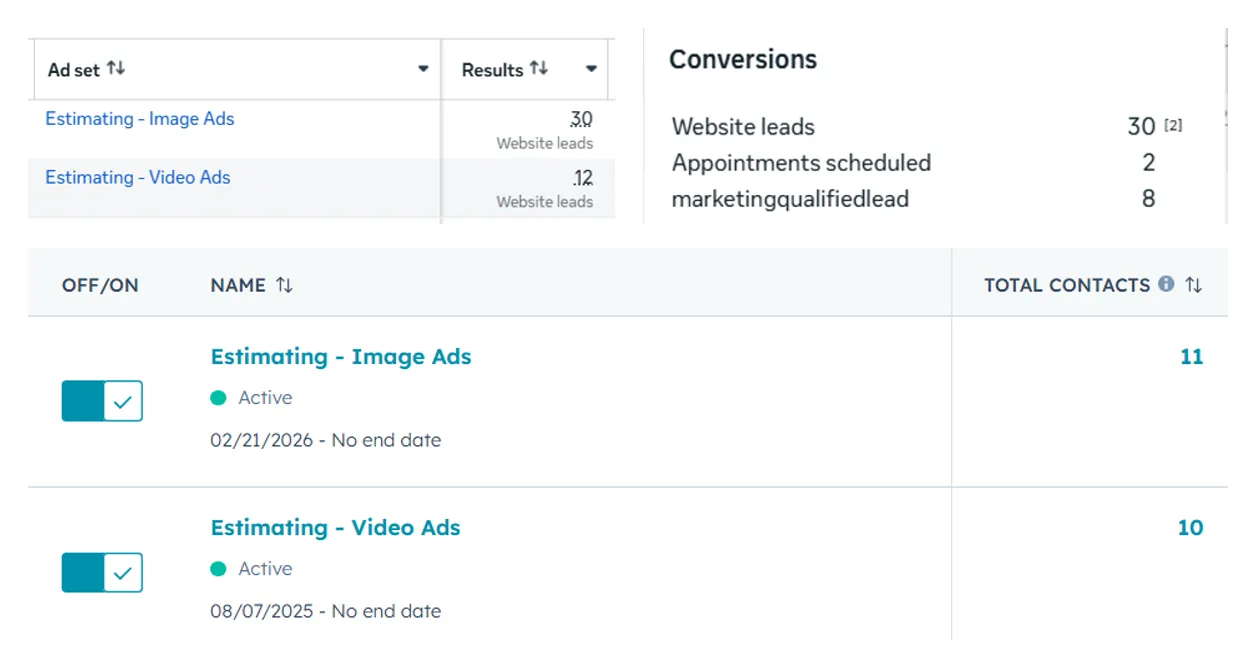
 1Meta: 30 + 12 leads 2HubSpot: 11 + 10 contacts
 - Meta: 30 + 12 leads
- HubSpot: 11 + 10 contacts
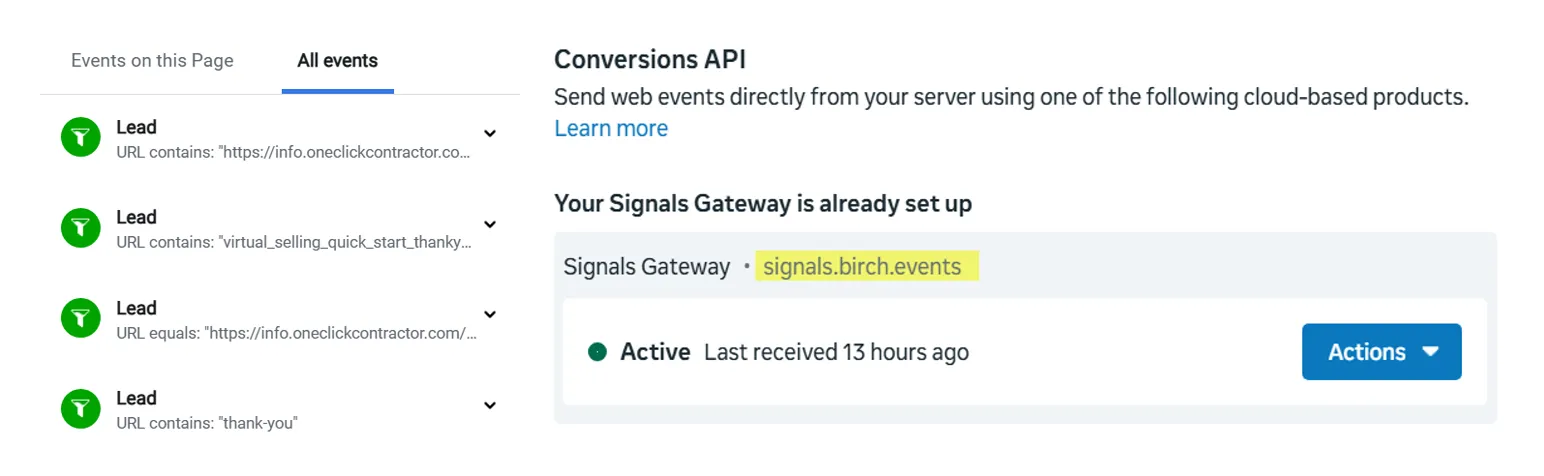 1Duplicate Lead events 2Leftover Signals Gateway
 - Duplicate Lead events
- Leftover Signals Gateway
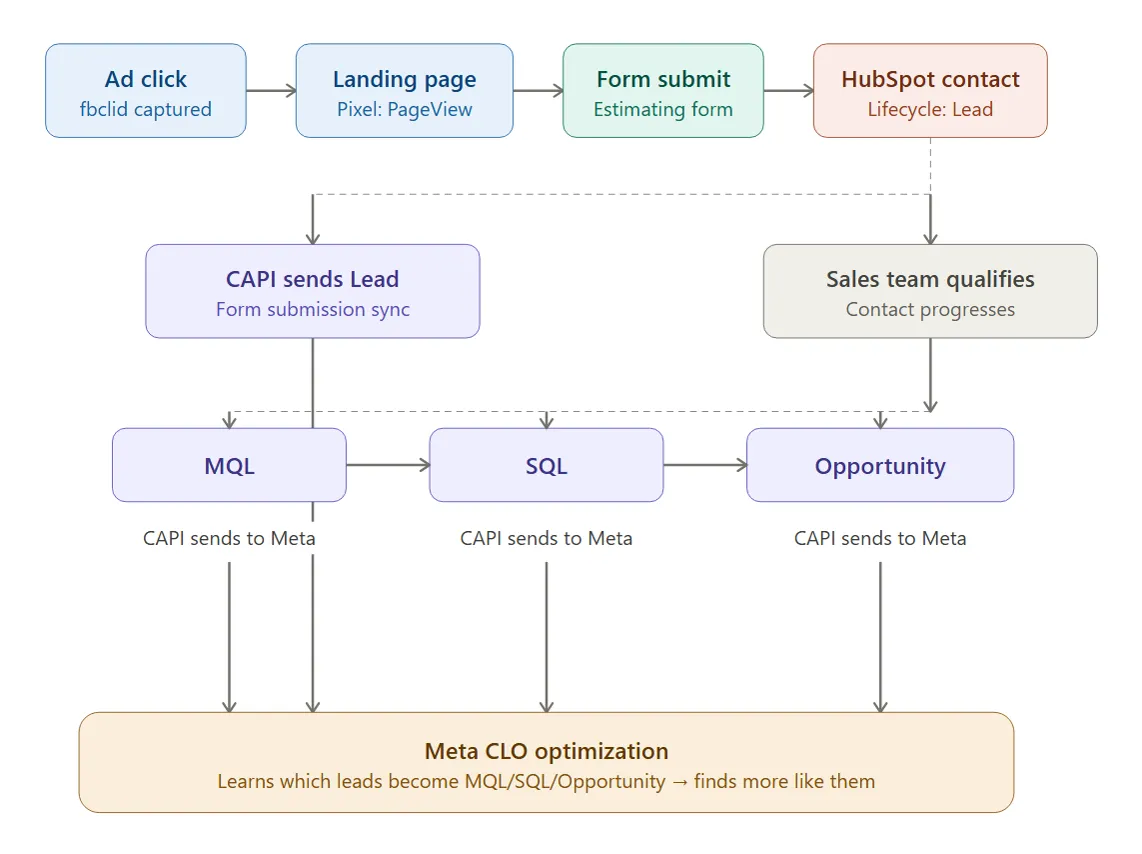 1HubSpot holds the truth 2Deeper stages sent to Meta 3Meta learns from real leads
 - HubSpot holds the truth
- Deeper stages sent to Meta
- Meta learns from real leads
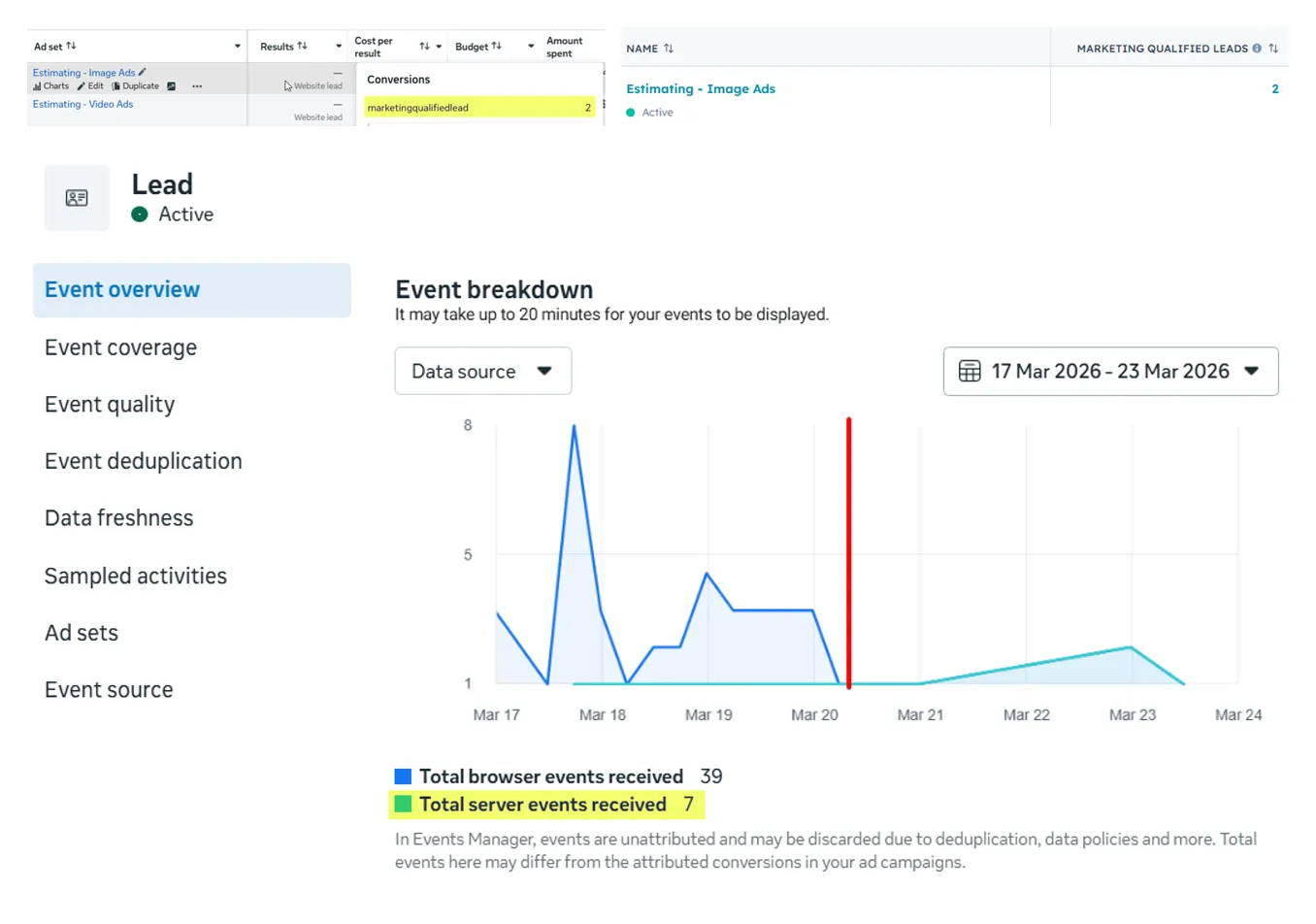 1Meta: 2 MQLs 2HubSpot: 2 MQLs 3Server events flowing
 - Meta: 2 MQLs
- HubSpot: 2 MQLs
- Server events flowing

One Click Contractor
Fixing Meta conversion tracking
The brand
One Click Contractor makes sales software for home improvement contractors, from estimates to signed proposals.
Why
Meta was reporting far more website leads than HubSpot could find. Meta was learning from bad data, and the team could not trust the numbers.
How
- I audited every Meta event on the client side and the server side.
- I removed 9 legacy Lead events that fired on page visits, button clicks, emails and phone links, and counted the same lead more than once.
- I found an old Signals Gateway trial that copied every Pixel event to the server, on top of HubSpot’s Conversions API. I disconnected it with no loss of tracking.
- Now the Meta Pixel in Google Tag Manager handles page views, and HubSpot’s Conversions API sends MQLs, SQLs and opportunities back to Meta.
What I learned
- When ad platform numbers look too good, check for duplicate events first.
- Optimising for MQLs and opportunities, not form fills, tells Meta to find leads that become customers.
Want something like this for your team?
Let’s talk LinkedIn